Frequently Asked Questions
Finding a therapist
Tips for finding a therapist–from navigating insurance coverage to therapeutic fit.
Finding The Right Therapist For You
Where can I look for a therapist?
A great way to start would be to use reputable online therapist directories, like our Asian Therapist Directory or Psychology Today. These directories allow you to filter therapists based on the state you’re living in, virtual or in person sessions, insurance or private pay, challenges or specialities. They also help you fine tune your fit by sorting based on other factors such as race/ethnicity, gender, or languages spoken.
What do all the letters after a therapist’s name mean?
There are many different types of therapists out there, and they vary based on what type of education and focus in training they’ve received. Some designations vary by state and each state governs the licensure process.
Doctoral Level:
- Licensed Psychologists have a PhD or PsyD, and they are trained in the assessment and treatment of mental health disorders.
- Licensed Psychiatrists are medical doctors with an MD or DO, and they are able to prescribe and manage medication. There are several kinds of therapists at the master’s level.
Masters Level:
- Licensed Marriage and Family Therapists (LMFTs): Their training focuses on individuals, couples, or groups, and there is a focus on the impact of interpersonal relationships and family dynamics on functioning.
- Licensed Clinical Social Worker (LCSWs): Their training focuses on both counseling and social work, and they may incorporate social justice and systemic issues into their work.
- Licensed Professional Counselor (LPCs), Licensed Professional Clinical Counselor (LPCCs), and Licensed Mental Health Counselor (LMHCs): These 3 kinds of therapists are trained to provide counseling interventions and psychotherapeutic techniques to diverse individuals, families, and groups to achieve mental health, wellness, education, and career goals.
What is the difference between a life coach and a therapist?
Life coaches and therapists differ based on the education and training required for each profession. More information can be found in this article.
What is a consultation, and how do I schedule one?
A consultation is a brief introductory meeting between a potential client and therapist to assess fit. Typically, therapists will offer a free consultation to learn more about why you’re seeking therapy and answer any questions you might have about the process or their practice. If the therapist determines that they may not be a good fit, they often offer a referral to a therapist that they believe may be a better fit for you.
Simply message the therapist asking for a consultation and briefly describe your situation and what you may be looking for in a therapeutic relationship. You may also want to ask whether they are accepting new clients, what their fees are, and whether they accept insurance or offer a sliding scale.
Remember, this is also an opportunity for you to determine if the therapist is a good fit for you. It is not uncommon to interview 3 to 5 therapists during this time period, but it’s also possible to feel an immediate connection with the first therapist you reach out to.
Some common questions to ask yourself during these consultations include:
- Do I feel comfortable opening up to this person and is there a strong connection? Studies show that this feeling of connection is essential to achieving success in any therapy.
- Is the therapist empathic and a good listener?
- What are the therapist’s credentials and their level of expertise? Have they treated others with your particular condition? What types of therapy do they offer? They should be able to explain why one type is better than another for your particular condition.
- How do they manage the fee/billing? Do they accept insurance? Do they offer a sliding scale?
- How do they collaborate with your psychiatrist or Primary Care Provider? This can greatly improve the quality of care.
- What is their recommended frequency of sessions? Do they offer evening and weekends hours?
What are some red flags to look out for when searching for a therapist?
- Talking too much about themselves in a manner that feels like it takes away from the session.
- Professionalism or timeliness of responses. Because of the nature of work, it may take a few days for a therapist to contact you, but if you are waiting weeks for a response, this may be a sign of a lack of professionalism.
- Trying to create a relationship with you outside of therapy that you feel infringes upon your boundaries.
- You don’t feel heard or understood.
Don’t be afraid to speak up if you feel like something isn’t working. You are always able to end the therapeutic relationship and find a new therapist as needed.
Using Insurance
What is insurance, and what options are out there?
Health insurance typically requires an individual to pay for a monthly premium and in return the health insurance company covers all or some of an individual’s healthcare costs.
You may have a Health Maintenance Organization plan (HMO) where you can only use clinicians in-network, possibly requiring referral from your primary care physician (PCP), or Preferred Provider Organization plan (PPO) where you can go out of network to find a provider.
If you have an HMO and need to use an in-network clinician, you may find that list of clinicians on the insurance website. If a therapist states that they don’t accept insurance and you have PPO, you can potentially request a superbill (detailed invoice that includes your diagnosis) and submit it to your insurance for a reimbursement.
How do I know if my insurance covers therapy?
Contact your insurance directly through the contact number on the back of your insurance card. You can also contact them via their website portal.
Ask for details about your specific nsurance coverage for outpatient mental health services. This may include:
- Your annual deductible (which is the minimum amount you must first pay out of pocket annually before your insurance goes into effect and begins to cover your health expenses)
- How much insurance will reimburse or cover you once you meet your deductible
- How much your copay will be for each therapy session
- How many sessions your insurance covers and over what duration of time
If you have a particular therapist in mind, you can also confirm with your insurance that they are in-network. You can also confirm this directly with your therapist, or potential therapists.
Please note that if you do use insurance to see a therapist, you will have to receive a “diagnosis” for billing purposes.
Will my parents know if I use their insurance?
The answer to this question may vary state by state.
- If you’re under your parents’ insurance plan they may receive some of your confidential health information as part of regular communications or billing
- While there’s no guarantee of success, you can try asking your insurance provider to keep your sensitive health information from being shared with the policyholder.
- In some states, you may also have additional privacy rights, such as:
California: If you’re under 18 and receive confidential services, such as mental health, sexual health, or substance abuse care, your healthcare provider can’t tell your parents or guardians anything about your exam. If you are 18 and older, your medical records are private.
Can I get therapy even if I don't have insurance?
Even without insurance, there are still a variety of alternatives available to you. These include paying out-of-pocket, asking a provider for a sliding scale rate based on income, seeking out therapy services at nonprofits and/or clinical training sites that may offer free or low-cost resources.
Open Path Psychotherapy Collective is an example of a nonprofit organization that provides a directory of therapists offering services at a significantly reduced rate (as low as $30/session) after you pay an initial subscription fee.
About Confidentiality
What are a therapist's obligations regarding confidentiality?
Therapists are bound by HIPPA (Health Insurance Portability and Accountability Act), a U.S. law enacted in 1996 that protects the privacy of individuals’ medical and mental health information.
Key elements of HIPAA include:
- Client rights to privacy
- Secure storage and transmission of records
- Breach notifications
Therapists are ethically and legally required to maintain confidentiality, with certain legally mandated exceptions.
What are the circumstances under which a therapist can or must break confidentiality?
- Risk of harm to self or others / “duty to protect”
If a therapist believes a client is at imminent risk of harming themselves (e.g., suicidal intent) or someone else (e.g., threats of violence), they are legally and ethically obligated to take steps to protect the person in danger, which may include breaking confidentiality to contact emergency services or warn potential victims. - Suspected abuse
Therapists are mandated reporters, which means they must report suspected abuse or neglect of vulnerable individuals—such as children, the elderly, or dependent adults—to the appropriate protective services, even without the client’s consent. - Legal subpoenas or court orders
If a therapist receives a valid subpoena or court order requiring the release of therapy records or testimony, they may be legally compelled to share confidential information, though they can often advocate to limit the scope of disclosure where possible.
If you would like to learn more about confidentiality, review the ACA Code of Ethics.
How do I deal with telling a therapist that I have been having thoughts of suicide?
Therapists take suicidal ideation seriously. They may conduct a risk assessment, but generally will only break confidentiality if you express an imminent plan or intent. Otherwise, they’ll work with you supportively.
Can my therapist report me to the authorities?
Only if there’s an imminent risk of harm to self or others.
Therapist Questions about our Directory
Information for providers looking to create or update their directory listing
How do I join the therapist directory?
Please complete the AMHC Therapist Directory New Provider Application form.
Application turnaround time is currently 6-8 weeks. Please read the application carefully—duplicate or incorrectly submitted applications will be delayed or voided.
Where do l update my profile?
To update any detail of your listing, please visit our Update Therapist Profile Instructions document.
Why aren't my profile updates showing?
- Check to make sure that you have updated your “Therapist” profile (shown in Step 7 of the Update Therapist Profile Instructions)
- If you are not able to access your therapist profile from the “Therapists” tab, you may need to manually set a new password on your WordPress profile (screenshot below).
- If you are still unable to access your therapist profile after that, try logging out and logging back in.
- If you have any further issues, please reach out to support@asianmhc.org.
How often should I update my profile?
You should update your profile whenever the nature of your practice changes.
The most common example is a directory provider having a full caseload. In this case, the provider enters their listing to add wording stating they are at capacity and unchecks the Therapy Fund Provider box when editing their listing.
I want to close my listing. How do I do this?
When entering your listing settings, find the “Publish” box and change the visibility from “Public” to “Private”. This will ensure your listing is inaccessible to any directory user.
If you would like to completely remove your listing, click the red text that says “Move to trash.”
Please note that AMHC cannot restore listings from the trash.
How can I become a Therapy Fund provider?
Thank you for your interest in joining our network of approved Therapy Fund providers.
If you are not yet on our directory, please fill out our Therapist Directory New Provider form. We process applications in 6-8 week batches. When you’re added to our directory, you are automatically approved to mark your profile to show you are an “active” Therapy Fund Provider and able to meet with Therapy Fund recipients. To mark yourself as “active,” please ensure you have the “Therapy Fund Provider” checkbox checked. Instructions can be found here, shown in step 11.
Using the Directory
For anyone looking to use our therapist directory to find mental health care.
How should I use the directory?
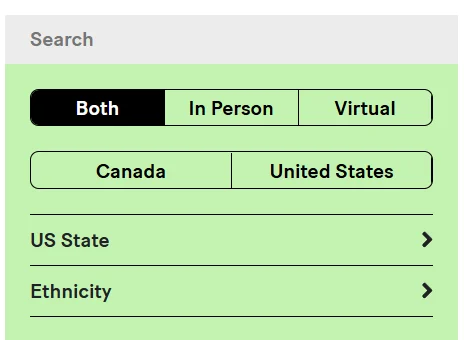
The directory has an extensive filtering system. We highly encourage you to use these filters whenever possible to find the right therapist fit. Using the country and state filters are most important, since therapists need to be eligible to provide care based on the state you live in.
I know an Asian provider who should be in the directory!
Thank you for your willingness to help grow our directory!
If you know an Asian provider who is willing to join the directory, please send them our AMHC Therapist Directory New Provider Application form.
Once I find a few providers, what then?
We recommend the following conversations and clarifications, especially if this is your first time finding a provider:
- Reach out to multiple providers when beginning your search. Do not feel constrained to only one provider – it is common to switch providers in order to find your best therapeutic fit.
- Many providers offer a free consultation; AMHC recommends you ask the provider if they offer this.
- Providers must clarify their policy around late cancellations and reschedules; hold providers accountable to doing so.
- In addition, ask if they charge for the first missed session.
Consider pricing as well. The spectrum of pricing is non-linear and differs by region. This list roughly encompasses, from least to most expensive, common available options:
- In-school counseling services,
- Practicums (receiving care from therapists-in-training),
- Nonprofits,
- Private practices
Otherwise, we recommend reading the provider’s blurb to see if their treatment ideology, background (whether that is ethnic, cultural, sexual, or otherwise), and specialties mesh with what you’re looking for.
You may only see a provider who is licensed in your state of residence.
About Therapy Funds
How can I get free therapy through AMHC’s Therapy Funds?
You can learn more about the Lotus Therapy Fund here.
You can learn more about the Asian Organizers Therapy Fund here.
Applications typically open on a quarterly basis, and usually remain open for a week.
- Q1 application: Mid-December
- Q2 application: Mid-March
- Q3 application: Mid-June
- Q4 application: Mid-September
To stay updated on the latest application and program dates, please follow us on Instagram or subscribe to our newsletter.
Who is eligible?
Currently, our Therapy Funds are only offered to our community members who are living in the U.S., and who are 18 years of age or older. More details on AMHC and its work can be found here.
What's the difference between the Lotus and Asian Organizer Therapy Funds?
The main differences are the recipients and funding source.
Lotus Therapy Fund is for the AMHC community at large.
Asian Organizer Fund, co-funded by Asian Americans Advancing Justice | AAJC, is created to provide free therapy to our community members who identify as a current grassroots, community, or labor organizer, or as a cultural worker, advocate, or activist. People who are eligible for the Asian Organizer Fund are also welcome to apply to Lotus Therapy Fund.
Both programs are served by Therapy Fund providers.
Do recipients or therapists pay at all?
No.
There is no fee for recipients to apply. Likewise, there is no fee for a therapist to join our directory as a Therapy Fund provider.
Can Therapy Funds be used for telehealth?
Yes, Therapy Funds can be used for in-person or telehealth sessions, assuming the telehealth platform used is HIPPA compliant.
Regardless of whether you see your therapist in-person or virtually, providers must be licensed in the your state of residence.
How long is each cohort?
Each cohort runs for approximately three months.
Therapy Fund Recipients
Information for recipients of Lotus and Asian Organizer Therapy Funds.
How do I find a Therapy Fund provider?
You are solely responsible for the therapist selection and outreach process.
To begin, visit the list of Therapy Fund Clinicians on our Therapist Directory that uses the filter “Therapy Fund Provider” for a list of active Therapy Fund providers.
When reaching out to a provider, you must provide your Therapy Fund code that was provided when you were confirmed as a Therapy Fund recipient.
You are responsible for ensuring that you utilize and remain within the eight free therapy sessions per cohort. You will be responsible for any costs incurred beyond the 8 free sessions awarded.
We recommend you do the following, especially if this is your first time trying therapy:
- Reach out to multiple providers when beginning your search. You do not have to stay with a single provider for all eight sessions.
- Many providers offer a free consultation; AMHC recommends you ask the provider if they offer this. Use the consultation to see if they feel like a good fit. See our FAQ above on how to use a consultation to find the best fit therapist.
- Ask the providers about their policy for cancellations and rescheduling; it is your responsibility to make sure that you cancel or reschedule according to their policy.
- Read the provider’s blurb to see if their treatment ideology, background (whether that is ethnic, cultural, LGBT identity, or otherwise), and specialties mesh with what you’re looking for.
***Please also note that you may only see a provider who is licensed in your state of residence.
***Please note that we cannot help you find a provider or assess therapeutic fit.
Can I switch providers at any time?
Yes.
If you don’t have future sessions planned with your provider, it is not necessary to notify your provider if you’re switching away from them. A short email is sufficient to notify your provider that you won’t be scheduling more sessions with them.
If you do have future sessions scheduled, you should notify your provider about session cancellations and mention you are seeking a different provider. Remember to review their cancellation policy, as one of your sessions may be deducted if you do not cancel within the agreed upon window.
Can I use funds with a provider who isn’t on the directory?
No, therapy funds can only be used to reimburse providers on the AMHC Therapist Directory. You may use Therapy Funds with them once they are in the AMHC therapist directory. They can apply to join the directory here.
If you need to expedite this process, have your current provider email therapy@asianmhc.org with the following subject line and your Therapy Fund Code:
Rush Therapy Fund Verification [FirstName LastName] P-XXXXXX
Example: Rush Therapy Fund Verification [Ash Ketchum], P-123456
How often should I meet with my provider?
We recommend you meet weekly with your provider to ensure completion of your 8 sessions within the allotted 3 month timeframe.
What kind of therapy does Lotus Therapy Fund support?
You may use Therapy Funds toward therapy sessions run by a Therapy Fund provider, whether they are individual, couple, family, or group sessions. No matter what type of session, however, it will count as 1 Therapy Fund session. Please confirm with your provider that they are okay with other formats of therapy other than individual. Their reimbursement rate through Lotus Therapy Fund will not change.
Example: For a couples therapy session, one (1) session is billed to the Lotus Therapy Fund recipient’s funds.
You may meet in-person or via telehealth.
Am I responsible for paying?
No. AMHC is responsible for the entire cost of the session. If a provider asks you to pay them directly or requires a co-pay, do not pay them and email therapy@asianmhc.org.
For example, if you meet with a provider whose usual rate is $250, you are not responsible for paying the provider any portion of that fee. AMHC reimburses all providers at $150 per session.
What if I need more than eight sessions?
In order to continue receiving free therapy past your 8 sessions, you must reapply during the next open application round. Unfortunately, you are not guaranteed a placement, regardless of your prior involvement with our Therapy Funds. Please prepare to transition out of therapy, or to move to a different method of payment after 8 sessions. We are only able to offer continuing enrollment to a very small number of applicants.
What if I need more time to use my 8 sessions?
Please email us at therapy@asianmhc.org with your Therapy Fund code and a brief explanation of why you require a time extension. Please understand that extensions cannot be granted to all requests.
Extensions only grant you additional time to use your allotted eight sessions. An extension does not provide you with additional total sessions.
What if I wasn’t accepted into a Therapy Fund?
If you weren’t accepted as a Therapy Fund recipient, please consider exploring other mental health resources and support options available through the Asian Mental Health Collective or other organizations.
These include:
- Subtle Asian Mental Health Facebook Group
- Searching AMHC’s Therapist Directory for sliding scale providers
- Exploring other community support groups and resources
Additionally, please consider reapplying for the next application cycle. Stay tuned for updates via our newsletter or by following us on Instagram.
I no longer wish to participate in the Therapy Fund. What do I do?
Email us at therapy@asianmhc.org as soon as possible so we can assist someone on our waitlist.
Therapy Fund Providers
Information for clinical providers of Lotus and Asian Organizer Therapy Funds
How do I become a Therapy Fund provider?
If you are already on the AMHC Therapist directory and your licensure has not yet been verified by AMHC:
Please send an email to licensure@asianmhc.org with the subject line “Existing Provider Verification [YourFirstName YourLastName]”
Example: Existing Provider Verification [Ash Ketchum]
If you are not already on the directory, please fill out our Therapist Directory form.
We currently process applications in 6-8 week batches.
If you are in the directory and are verified, please ensure you have the “Therapy Fund Provider” checkbox checked. Instructions can be found here, shown in step 11.
How do I invoice for a session?
Use our Invoice Portal! You can find instructions on how to use the portal in two ways:
- A step-by-step written guide with screenshots!
- A video tutorial featuring our Therapy Fund Coordinator, Michael Ge!
We recommend using this HIPPA-compliant, standardized template to ensure that your invoice is processed promptly, as it includes all necessary fields and omits unnecessary details.
We encourage you to submit each invoice within one week of the session to ensure timely processing. However, the deadline for submitting all therapy fund invoices and receiving payment is Close of Business (COB) on the 15th of the month after the quarter ends.
Example: Q1 therapy fund runs from January 1 – March 31st, so all invoices are due by April 15th.
If your Therapy Fund recipient has been approved for an extension, invoices will be due the 15th of the month following their extension deadline.
Invoices will not be processed if submitted after this date.
Payment for sessions will be made via direct deposit or check. It typically takes 5–10 business days to process.
If a client has reached their limit of Therapy Fund sessions, the client is responsible for their continued treatment and its payment. To prevent unexpected loss of coverage, keep track of how many sessions out of 8 the client has received.
How do I get therapy fund clients?
Your status as an active Therapy Fund provider does not guarantee you a match; matching depends on whether a client chooses to work with you. Clients are solely responsible for reaching out to providers they are interested in working with. Your role as a therapy fund clinician is to prepare to respond to therapy fund recipients who reach out for therapy sessions.
Can I refer a client to your Therapy Funds?
You are welcome to encourage people to apply for both our Therapy Funds, and generally spread the word about our program!
We define “referral” as sending Therapy Fund information to prospective applicants; a referral does not bestow any preference to the applicant’s recipient application.
What is the reimbursement rate for AMHC-funded therapy sessions?
Therapists are paid $150 per session.
Each billable Therapy Fund session is no longer than 60 minutes. Sessions themselves may be longer, but each hour is considered a session. We cannot reimburse “partial” sessions.
Example: We cannot pay out a 1.5 hour session as $150 x 1.5 LTF sessions).
Please bear in mind that, while we allow reimbursement for couples or family therapy for Therapy Fund recipients, we do not increase the rate beyond $150/session.
Balance billing—the act of charging a patient for the difference between your typical rate and our reimbursement rate—is strictly disallowed.
How many Therapy Fund clients can I see?
There is no limit to the number of clients a provider can see through Therapy Funds.
How do I handle late or canceled sessions?
We recommend that you provide a free 15 min initial consultation, as many Therapy Fund recipients are finding mental health support for the first time.
A typical cancellation policy requires clients to provide 24–48 hours notification for cancellation. Some of our clinicians opt to waive one late cancellation due to the nature of Therapy Fund clientele, as many are seeking mental health care for the first time. Regardless, AMHC defers to your practice’s policies.
If a client is late to/misses a billable session, this counts as one of the eight total TF sessions.
I am an associate licensed clinician (ASW, LMSW, LAMFT, LAPC, etc.); can I participate in LTF?
If your state/jurisdiction allows you to work with clients in private practice, you may participate in our Therapy Funds. You are responsible for any clinical supervision requirements as well as liability insurance.
Does AMHC provide clinical supervision for providers working with LTF recipients?
No. If you are provisionally licensed and require supervision, you are responsible for finding your own supervision of your Therapy Fund cases.
How do I stop being a Therapy Fund provider?
Being a Therapy Fund provider is based on an opt-in/opt-out system.
If you are no longer accepting new Therapy Fund clients, uncheck the “Therapy Fund Provider” checkbox on your directory profile. Instructions can be found here, shown in step 11.
Finding a therapist
Tips for finding a therapist–from navigating insurance coverage to therapeutic fit.
Finding The Right Therapist For You
Where can I look for a therapist?
A great way to start would be to use reputable online therapist directories, like our Asian Therapist Directory or Psychology Today. These directories allow you to filter therapists based on the state you’re living in, virtual or in person sessions, insurance or private pay, challenges or specialities. They also help you fine tune your fit by sorting based on other factors such as race/ethnicity, gender, or languages spoken.
What do all the letters after a therapist’s name mean?
There are many different types of therapists out there, and they vary based on what type of education and focus in training they’ve received. Some designations vary by state and each state governs the licensure process.
Doctoral Level:
- Licensed Psychologists have a PhD or PsyD, and they are trained in the assessment and treatment of mental health disorders.
- Licensed Psychiatrists are medical doctors with an MD or DO, and they are able to prescribe and manage medication. There are several kinds of therapists at the master’s level.
Masters Level:
- Licensed Marriage and Family Therapists (LMFTs): Their training focuses on individuals, couples, or groups, and there is a focus on the impact of interpersonal relationships and family dynamics on functioning.
- Licensed Clinical Social Worker (LCSWs): Their training focuses on both counseling and social work, and they may incorporate social justice and systemic issues into their work.
- Licensed Professional Counselor (LPCs), Licensed Professional Clinical Counselor (LPCCs), and Licensed Mental Health Counselor (LMHCs): These 3 kinds of therapists are trained to provide counseling interventions and psychotherapeutic techniques to diverse individuals, families, and groups to achieve mental health, wellness, education, and career goals.
What is the difference between a life coach and a therapist?
Life coaches and therapists differ based on the education and training required for each profession. More information can be found in this article.
What is a consultation, and how do I schedule one?
A consultation is a brief introductory meeting between a potential client and therapist to assess fit. Typically, therapists will offer a free consultation to learn more about why you’re seeking therapy and answer any questions you might have about the process or their practice. If the therapist determines that they may not be a good fit, they often offer a referral to a therapist that they believe may be a better fit for you.
Simply message the therapist asking for a consultation and briefly describe your situation and what you may be looking for in a therapeutic relationship. You may also want to ask whether they are accepting new clients, what their fees are, and whether they accept insurance or offer a sliding scale.
Remember, this is also an opportunity for you to determine if the therapist is a good fit for you. It is not uncommon to interview 3 to 5 therapists during this time period, but it’s also possible to feel an immediate connection with the first therapist you reach out to.
Some common questions to ask yourself during these consultations include:
- Do I feel comfortable opening up to this person and is there a strong connection? Studies show that this feeling of connection is essential to achieving success in any therapy.
- Is the therapist empathic and a good listener?
- What are the therapist’s credentials and their level of expertise? Have they treated others with your particular condition? What types of therapy do they offer? They should be able to explain why one type is better than another for your particular condition.
- How do they manage the fee/billing? Do they accept insurance? Do they offer a sliding scale?
- How do they collaborate with your psychiatrist or Primary Care Provider? This can greatly improve the quality of care.
- What is their recommended frequency of sessions? Do they offer evening and weekends hours?
What are some red flags to look out for when searching for a therapist?
- Talking too much about themselves in a manner that feels like it takes away from the session.
- Professionalism or timeliness of responses. Because of the nature of work, it may take a few days for a therapist to contact you, but if you are waiting weeks for a response, this may be a sign of a lack of professionalism.
- Trying to create a relationship with you outside of therapy that you feel infringes upon your boundaries.
- You don’t feel heard or understood.
Don’t be afraid to speak up if you feel like something isn’t working. You are always able to end the therapeutic relationship and find a new therapist as needed.
Using Insurance
What is insurance, and what options are out there?
Health insurance typically requires an individual to pay for a monthly premium and in return the health insurance company covers all or some of an individual’s healthcare costs.
You may have a Health Maintenance Organization plan (HMO) where you can only use clinicians in-network, possibly requiring referral from your primary care physician (PCP), or Preferred Provider Organization plan (PPO) where you can go out of network to find a provider.
If you have an HMO and need to use an in-network clinician, you may find that list of clinicians on the insurance website. If a therapist states that they don’t accept insurance and you have PPO, you can potentially request a superbill (detailed invoice that includes your diagnosis) and submit it to your insurance for a reimbursement.
How do I know if my insurance covers therapy?
Contact your insurance directly through the contact number on the back of your insurance card. You can also contact them via their website portal.
Ask for details about your specific nsurance coverage for outpatient mental health services. This may include:
- Your annual deductible (which is the minimum amount you must first pay out of pocket annually before your insurance goes into effect and begins to cover your health expenses)
- How much insurance will reimburse or cover you once you meet your deductible
- How much your copay will be for each therapy session
- How many sessions your insurance covers and over what duration of time
If you have a particular therapist in mind, you can also confirm with your insurance that they are in-network. You can also confirm this directly with your therapist, or potential therapists.
Please note that if you do use insurance to see a therapist, you will have to receive a “diagnosis” for billing purposes.
Will my parents know if I use their insurance?
The answer to this question may vary state by state.
- If you’re under your parents’ insurance plan they may receive some of your confidential health information as part of regular communications or billing
- While there’s no guarantee of success, you can try asking your insurance provider to keep your sensitive health information from being shared with the policyholder.
- In some states, you may also have additional privacy rights, such as:
California: If you’re under 18 and receive confidential services, such as mental health, sexual health, or substance abuse care, your healthcare provider can’t tell your parents or guardians anything about your exam. If you are 18 and older, your medical records are private.
Can I get therapy even if I don't have insurance?
Even without insurance, there are still a variety of alternatives available to you. These include paying out-of-pocket, asking a provider for a sliding scale rate based on income, seeking out therapy services at nonprofits and/or clinical training sites that may offer free or low-cost resources.
Open Path Psychotherapy Collective is an example of a nonprofit organization that provides a directory of therapists offering services at a significantly reduced rate (as low as $30/session) after you pay an initial subscription fee.
About Confidentiality
What are a therapist's obligations regarding confidentiality?
Therapists are bound by HIPPA (Health Insurance Portability and Accountability Act), a U.S. law enacted in 1996 that protects the privacy of individuals’ medical and mental health information.
Key elements of HIPAA include:
- Client rights to privacy
- Secure storage and transmission of records
- Breach notifications
Therapists are ethically and legally required to maintain confidentiality, with certain legally mandated exceptions.
What are the circumstances under which a therapist can or must break confidentiality?
- Risk of harm to self or others / “duty to protect”
If a therapist believes a client is at imminent risk of harming themselves (e.g., suicidal intent) or someone else (e.g., threats of violence), they are legally and ethically obligated to take steps to protect the person in danger, which may include breaking confidentiality to contact emergency services or warn potential victims. - Suspected abuse
Therapists are mandated reporters, which means they must report suspected abuse or neglect of vulnerable individuals—such as children, the elderly, or dependent adults—to the appropriate protective services, even without the client’s consent. - Legal subpoenas or court orders
If a therapist receives a valid subpoena or court order requiring the release of therapy records or testimony, they may be legally compelled to share confidential information, though they can often advocate to limit the scope of disclosure where possible.
If you would like to learn more about confidentiality, review the ACA Code of Ethics.
How do I deal with telling a therapist that I have been having thoughts of suicide?
Therapists take suicidal ideation seriously. They may conduct a risk assessment, but generally will only break confidentiality if you express an imminent plan or intent. Otherwise, they’ll work with you supportively.
Can my therapist report me to the authorities?
Only if there’s an imminent risk of harm to self or others.
Therapist Questions about our Directory
For anyone looking to use our therapist directory to find mental health care.
How should I use the directory?
The directory has an extensive filtering system. We highly encourage you to use these filters whenever possible to find the right therapist fit. Using the country and state filters are most important, since therapists need to be eligible to provide care based on the state you live in.
I know an Asian provider who should be in the directory!
Thank you for your willingness to help grow our directory!
If you know an Asian provider who is willing to join the directory, please send them our AMHC Therapist Directory New Provider Application form.
Once I find a few providers, what then?
We recommend the following conversations and clarifications, especially if this is your first time finding a provider:
- Reach out to multiple providers when beginning your search. Do not feel constrained to only one provider – it is common to switch providers in order to find your best therapeutic fit.
- Many providers offer a free consultation; AMHC recommends you ask the provider if they offer this.
- Providers must clarify their policy around late cancellations and reschedules; hold providers accountable to doing so.
- In addition, ask if they charge for the first missed session.
Consider pricing as well. The spectrum of pricing is non-linear and differs by region. This list roughly encompasses, from least to most expensive, common available options:
- In-school counseling services,
- Practicums (receiving care from therapists-in-training),
- Nonprofits,
- Private practices
Otherwise, we recommend reading the provider’s blurb to see if their treatment ideology, background (whether that is ethnic, cultural, sexual, or otherwise), and specialties mesh with what you’re looking for.
You may only see a provider who is licensed in your state of residence.
About Therapy Funds
How can I get free therapy through AMHC’s Therapy Funds?
You can learn more about the Lotus Therapy Fund here.
You can learn more about the Asian Organizers Therapy Fund here.
Applications typically open on a quarterly basis, and usually remain open for a week.
- Q1 application: Mid-December
- Q2 application: Mid-March
- Q3 application: Mid-June
- Q4 application: Mid-September
To stay updated on the latest application and program dates, please follow us on Instagram or subscribe to our newsletter.
Who is eligible?
Currently, our Therapy Funds are only offered to our community members who are living in the U.S., and who are 18 years of age or older. More details on AMHC and its work can be found here.
What's the difference between the Lotus and Asian Organizer Therapy Funds?
The main differences are the recipients and funding source.
Lotus Therapy Fund is for the AMHC community at large.
Asian Organizer Fund, co-funded by Asian Americans Advancing Justice | AAJC, is created to provide free therapy to our community members who identify as a current grassroots, community, or labor organizer, or as a cultural worker, advocate, or activist. People who are eligible for the Asian Organizer Fund are also welcome to apply to Lotus Therapy Fund.
Both programs are served by Therapy Fund providers.
Do recipients or therapists pay at all?
No.
There is no fee for recipients to apply. Likewise, there is no fee for a therapist to join our directory as a Therapy Fund provider.
Can Therapy Funds be used for telehealth?
Yes, Therapy Funds can be used for in-person or telehealth sessions, assuming the telehealth platform used is HIPPA compliant.
Regardless of whether you see your therapist in-person or virtually, providers must be licensed in the your state of residence.
How long is each cohort?
Each cohort runs for approximately three months.
Therapy Fund Recipients
Information for recipients of Lotus and Asian Organizer Therapy Funds.
How do I find a Therapy Fund provider?
You are solely responsible for the therapist selection and outreach process.
To begin, visit the list of Therapy Fund Clinicians on our Therapist Directory that uses the filter “Therapy Fund Provider” for a list of active Therapy Fund providers.
When reaching out to a provider, you must provide your Therapy Fund code that was provided when you were confirmed as a Therapy Fund recipient.
You are responsible for ensuring that you utilize and remain within the eight free therapy sessions per cohort. You will be responsible for any costs incurred beyond the 8 free sessions awarded.
We recommend you do the following, especially if this is your first time trying therapy:
- Reach out to multiple providers when beginning your search. You do not have to stay with a single provider for all eight sessions.
- Many providers offer a free consultation; AMHC recommends you ask the provider if they offer this. Use the consultation to see if they feel like a good fit. See our FAQ above on how to use a consultation to find the best fit therapist.
- Ask the providers about their policy for cancellations and rescheduling; it is your responsibility to make sure that you cancel or reschedule according to their policy.
- Read the provider’s blurb to see if their treatment ideology, background (whether that is ethnic, cultural, LGBT identity, or otherwise), and specialties mesh with what you’re looking for.
***Please also note that you may only see a provider who is licensed in your state of residence.
***Please note that we cannot help you find a provider or assess therapeutic fit.
Can I switch providers at any time?
Yes.
If you don’t have future sessions planned with your provider, it is not necessary to notify your provider if you’re switching away from them. A short email is sufficient to notify your provider that you won’t be scheduling more sessions with them.
If you do have future sessions scheduled, you should notify your provider about session cancellations and mention you are seeking a different provider. Remember to review their cancellation policy, as one of your sessions may be deducted if you do not cancel within the agreed upon window.
Can I use funds with a provider who isn’t on the directory?
No, therapy funds can only be used to reimburse providers on the AMHC Therapist Directory. You may use Therapy Funds with them once they are in the AMHC therapist directory. They can apply to join the directory here.
If you need to expedite this process, have your current provider email therapy@asianmhc.org with the following subject line and your Therapy Fund Code:
Rush Therapy Fund Verification [FirstName LastName] P-XXXXXX
Example: Rush Therapy Fund Verification [Ash Ketchum], P-123456
How often should I meet with my provider?
We recommend you meet weekly with your provider to ensure completion of your 8 sessions within the allotted 3 month timeframe.
What kind of therapy does Lotus Therapy Fund support?
You may use Therapy Funds toward therapy sessions run by a Therapy Fund provider, whether they are individual, couple, family, or group sessions. No matter what type of session, however, it will count as 1 Therapy Fund session. Please confirm with your provider that they are okay with other formats of therapy other than individual. Their reimbursement rate through Lotus Therapy Fund will not change.
Example: For a couples therapy session, one (1) session is billed to the Lotus Therapy Fund recipient’s funds.
You may meet in-person or via telehealth.
Am I responsible for paying?
No. AMHC is responsible for the entire cost of the session. If a provider asks you to pay them directly or requires a co-pay, do not pay them and email therapy@asianmhc.org.
For example, if you meet with a provider whose usual rate is $250, you are not responsible for paying the provider any portion of that fee. AMHC reimburses all providers at $150 per session.
What if I need more than eight sessions?
In order to continue receiving free therapy past your 8 sessions, you must reapply during the next open application round. Unfortunately, you are not guaranteed a placement, regardless of your prior involvement with our Therapy Funds. Please prepare to transition out of therapy, or to move to a different method of payment after 8 sessions. We are only able to offer continuing enrollment to a very small number of applicants.
What if I need more time to use my 8 sessions?
Please email us at therapy@asianmhc.org with your Therapy Fund code and a brief explanation of why you require a time extension. Please understand that extensions cannot be granted to all requests.
Extensions only grant you additional time to use your allotted eight sessions. An extension does not provide you with additional total sessions.
What if I wasn’t accepted into a Therapy Fund?
If you weren’t accepted as a Therapy Fund recipient, please consider exploring other mental health resources and support options available through the Asian Mental Health Collective or other organizations.
These include:
- Subtle Asian Mental Health Facebook Group
- Searching AMHC’s Therapist Directory for sliding scale providers
- Exploring other community support groups and resources
Additionally, please consider reapplying for the next application cycle. Stay tuned for updates via our newsletter or by following us on Instagram.
I no longer wish to participate in the Therapy Fund. What do I do?
Email us at therapy@asianmhc.org as soon as possible so we can assist someone on our waitlist.
Therapy Fund Providers
Information for clinical providers of Lotus and Asian Organizer Therapy Funds
How do I become a Therapy Fund provider?
If you are already on the AMHC Therapist directory and your licensure has not yet been verified by AMHC:
Please send an email to licensure@asianmhc.org with the subject line “Existing Provider Verification [YourFirstName YourLastName]”
Example: Existing Provider Verification [Ash Ketchum]
If you are not already on the directory, please fill out our Therapist Directory form.
We currently process applications in 6-8 week batches.
If you are in the directory and are verified, please ensure you have the “Therapy Fund Provider” checkbox checked. Instructions can be found here, shown in step 11.
How do I invoice for a session?
Use our Invoice Portal! You can find instructions on how to use the portal in two ways:
- A step-by-step written guide with screenshots!
- A video tutorial featuring our Therapy Fund Coordinator, Michael Ge!
We recommend using this HIPPA-compliant, standardized template to ensure that your invoice is processed promptly, as it includes all necessary fields and omits unnecessary details.
We encourage you to submit each invoice within one week of the session to ensure timely processing. However, the deadline for submitting all therapy fund invoices and receiving payment is Close of Business (COB) on the 15th of the month after the quarter ends.
Example: Q1 therapy fund runs from January 1 – March 31st, so all invoices are due by April 15th.
If your Therapy Fund recipient has been approved for an extension, invoices will be due the 15th of the month following their extension deadline.
Invoices will not be processed if submitted after this date.
Payment for sessions will be made via direct deposit or check. It typically takes 5–10 business days to process.
If a client has reached their limit of Therapy Fund sessions, the client is responsible for their continued treatment and its payment. To prevent unexpected loss of coverage, keep track of how many sessions out of 8 the client has received.
How do I get therapy fund clients?
Your status as an active Therapy Fund provider does not guarantee you a match; matching depends on whether a client chooses to work with you. Clients are solely responsible for reaching out to providers they are interested in working with. Your role as a therapy fund clinician is to prepare to respond to therapy fund recipients who reach out for therapy sessions.
Can I refer a client to your Therapy Funds?
You are welcome to encourage people to apply for both our Therapy Funds, and generally spread the word about our program!
We define “referral” as sending Therapy Fund information to prospective applicants; a referral does not bestow any preference to the applicant’s recipient application.
What is the reimbursement rate for AMHC-funded therapy sessions?
Therapists are paid $150 per session.
Each billable Therapy Fund session is no longer than 60 minutes. Sessions themselves may be longer, but each hour is considered a session. We cannot reimburse “partial” sessions.
Example: We cannot pay out a 1.5 hour session as $150 x 1.5 LTF sessions).
Please bear in mind that, while we allow reimbursement for couples or family therapy for Therapy Fund recipients, we do not increase the rate beyond $150/session.
Balance billing—the act of charging a patient for the difference between your typical rate and our reimbursement rate—is strictly disallowed.
How many Therapy Fund clients can I see?
There is no limit to the number of clients a provider can see through Therapy Funds.
How do I handle late or canceled sessions?
We recommend that you provide a free 15 min initial consultation, as many Therapy Fund recipients are finding mental health support for the first time.
A typical cancellation policy requires clients to provide 24–48 hours notification for cancellation. Some of our clinicians opt to waive one late cancellation due to the nature of Therapy Fund clientele, as many are seeking mental health care for the first time. Regardless, AMHC defers to your practice’s policies.
If a client is late to/misses a billable session, this counts as one of the eight total TF sessions.
I am an associate licensed clinician (ASW, LMSW, LAMFT, LAPC, etc.); can I participate in LTF?
If your state/jurisdiction allows you to work with clients in private practice, you may participate in our Therapy Funds. You are responsible for any clinical supervision requirements as well as liability insurance.
Does AMHC provide clinical supervision for providers working with LTF recipients?
No. If you are provisionally licensed and require supervision, you are responsible for finding your own supervision of your Therapy Fund cases.
How do I stop being a Therapy Fund provider?
Being a Therapy Fund provider is based on an opt-in/opt-out system.
If you are no longer accepting new Therapy Fund clients, uncheck the “Therapy Fund Provider” checkbox on your directory profile. Instructions can be found here, shown in step 11.
